Is a treadmill safe for dogs?
Yes, with the right equipment and supervision, and the type of treadmill matters more than anything else. The difference between a motorized belt and a motor-free one is the difference between a dog keeping up and a dog choosing.
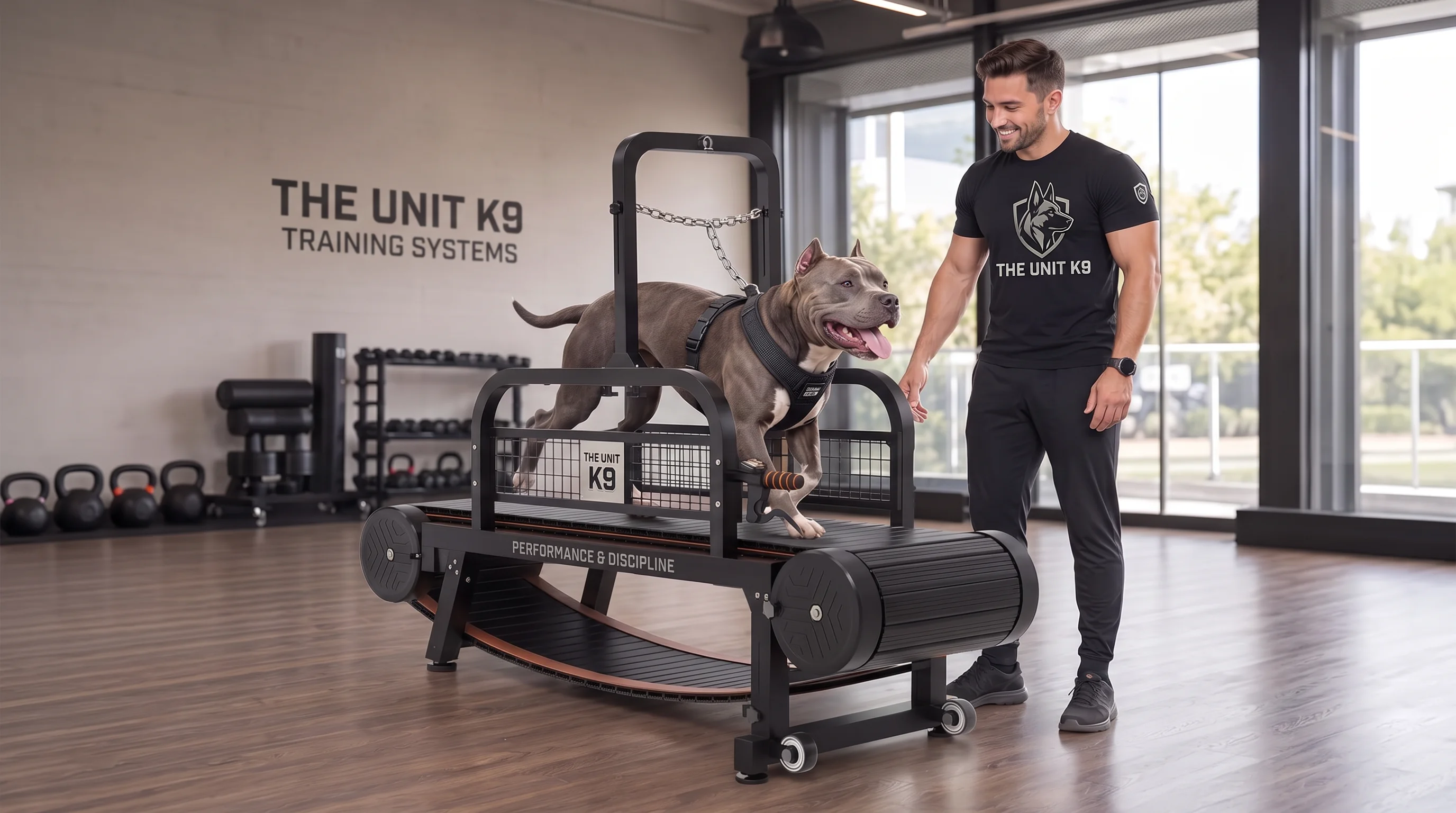
A treadmill is safe for a dog when the dog controls the pace, wears a harness, and is supervised for every second of the session. Remove any one of those three and the risk rises sharply.
Motor-free versus motorized
This is the distinction that matters most, and it is the one most owners have never heard of.
| Motor-free (slatmill) | Motorized | |
|---|---|---|
| Who sets the pace | The dog | The machine |
| If the dog slows down | The belt slows with them | The dog must keep up or be pulled |
| Muscle recruitment | Higher, the dog drives the belt | Lower, the belt drives the dog |
| Primary risk | Minimal, self-limiting | Being dragged at a pace they cannot hold |
On a motor-free belt the dog pushes from the hindquarters to move the surface underneath them. The session self-regulates: a tired dog simply slows down, and the equipment slows with them.
What safe supervision looks like
- A properly fitted harness, never a collar
- A person within arm's reach for the entire session
- Water offered throughout, not only at the end
- Gait and breathing watched continuously, not glanced at
- The session ended as soon as the dog shows it has had enough
A dog should never be left alone on a treadmill, tethered to one, or introduced to one by being placed on a belt that is already moving.
Which dogs should not use one
Puppies under four months, dogs with uncontrolled cardiac or respiratory conditions, and dogs recovering from surgery without veterinary clearance. Flat-faced breeds can often work, but need shorter sessions and closer monitoring because their breathing gives them less margin.
Always clear a new exercise program with your veterinarian first. That is not a disclaimer. It is how you avoid discovering a heart murmur the hard way.