How hot is too hot to walk your dog?
Air temperature is not the number that matters. Asphalt runs far hotter than the air above it, and the gap is what burns paws. Here is the conversion, the seven-second test, and what to do instead.

The short answer: if the air is above 85°F, the pavement is hot enough to injure your dog's paws, and above 90°F you should not be walking on asphalt at all during daylight. The reason has nothing to do with how the air feels to you.
Asphalt runs far hotter than the air
Dark asphalt absorbs solar radiation and re-emits it as heat. On a sunny day the surface temperature sits dramatically above the ambient air temperature, and that surface is what your dog is standing on with bare skin.
| Air | Asphalt | What it means for paws |
|---|---|---|
| 77°F | 125°F | Skin damage possible within 60 seconds |
| 86°F | 135°F | Burns likely in well under a minute |
| 87°F | 143°F | Burns on contact |
The seven-second test: press the back of your hand flat on the pavement and hold it. If you cannot keep it there for seven seconds, it is too hot for your dog to walk on.
Heat stroke is the bigger risk
Dogs do not sweat the way we do. They shed heat mainly by panting, which becomes far less effective in humid air. A dog can be in serious trouble well before an owner notices, and flat-faced breeds, overweight dogs, seniors and puppies have the least margin.
- Heavy panting that does not settle when the dog stops moving
- Thick, ropey drool
- Bright red or very pale gums
- Wobbling, stumbling, or reluctance to keep going
- Vomiting or diarrhea during or shortly after exercise
If you see these, stop, move the dog into shade or air conditioning, offer small amounts of cool water, and call your veterinarian. Heat stroke is a medical emergency and dogs die of it every summer.
What to do instead
- Walk at dawn or after dark, when the surface has had time to shed heat
- Stay on grass and dirt, which run far cooler than asphalt
- Cut duration rather than intensity: short, frequent outings are better than one long one
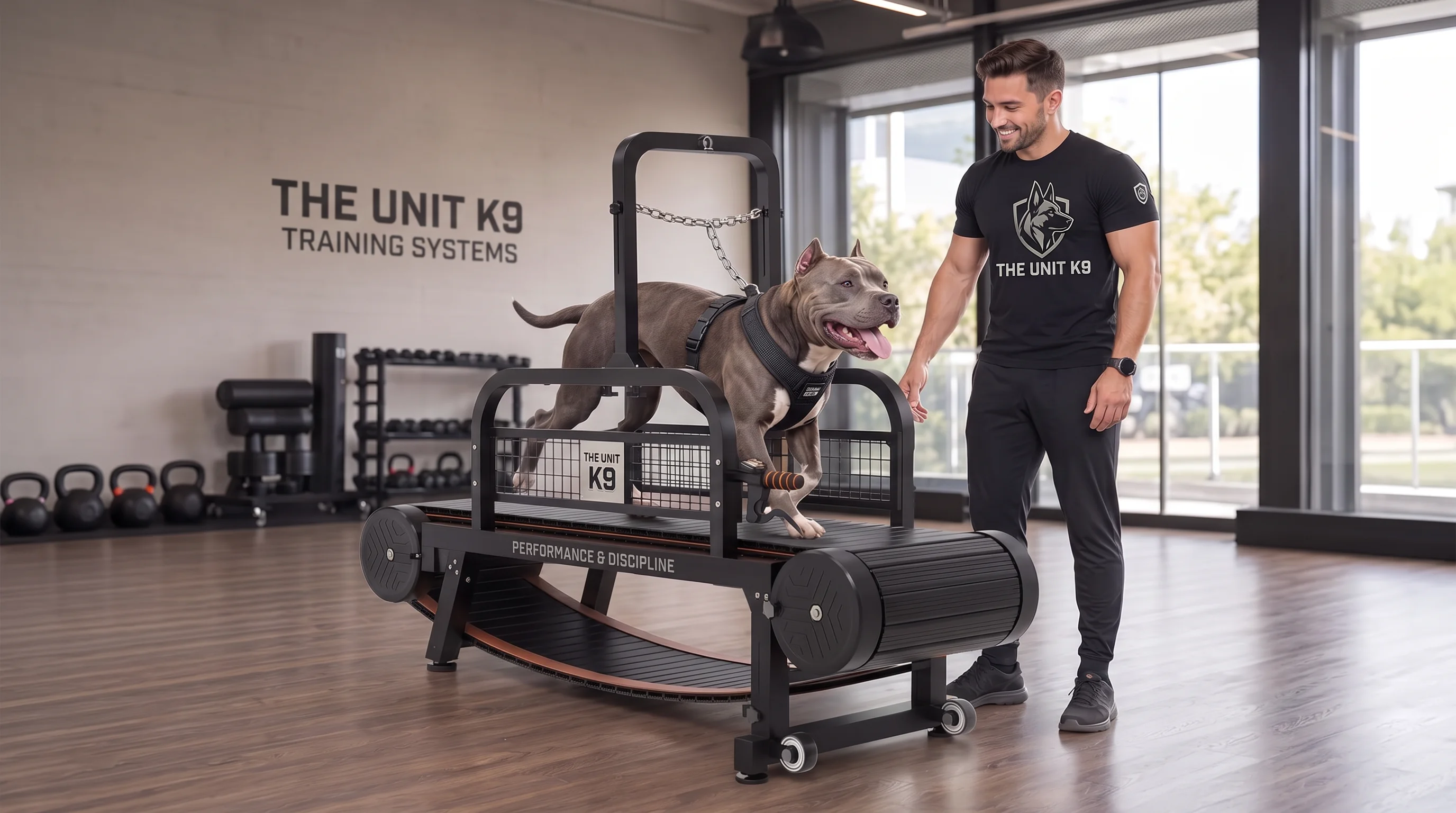
- Move exercise indoors entirely on advisory days
That last point is why we exist. A climate-controlled session means your dog's routine does not collapse for three months of the year, and the work happens at a temperature you would choose rather than one the weather imposed.